Searchresult

12/2024

Individual Stocks or Funds: Which is the Better Investment Strategy?

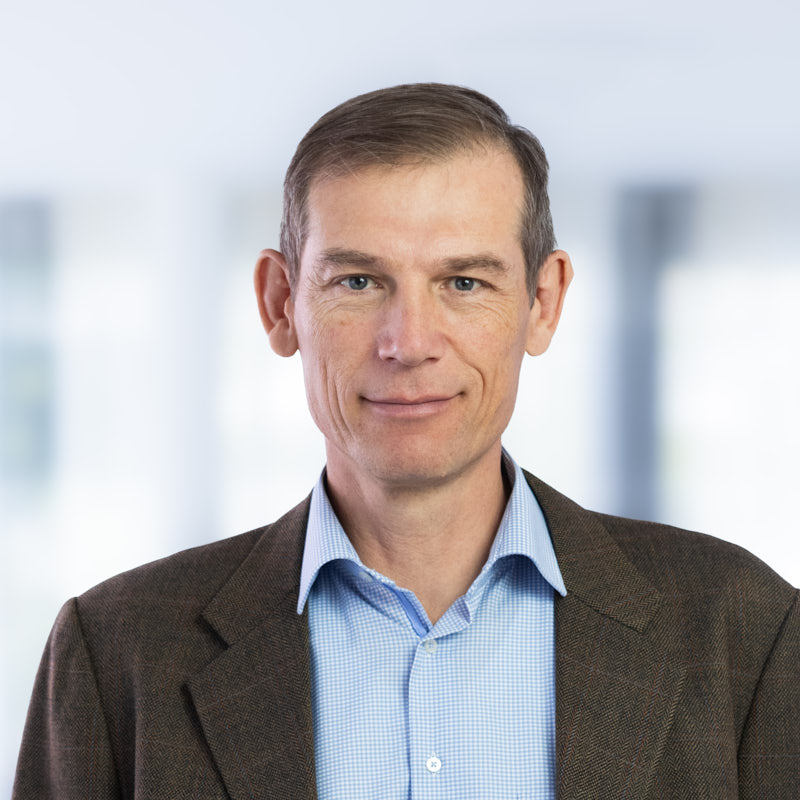
In the world of financial investments, investors are often faced with the question of whether it is better to invest in individual shares or funds. Andres Gujan explains the role that factors such as diversification, risk/return ratio and personal preferences play in this decision.

Diversification and Risk: Individual shares are targeted investments in individual companies, which enables potentially higher returns. However, this is also associated with a higher risk, as the success of an individual share depends heavily on company-specific and market-related factors. Funds, on the other hand, spread the risk across a large number of shares or asset classes, which reduces the risk of loss. At Carnot Capital, we always keep an eye on these risk factors and periodically compare the portfolio with the ESG and impact values.

Risk-Return Profile: Individual shares can fluctuate strongly in the short term, but offer the opportunity for considerable gains in the long term. Funds offer a more stable performance over longer periods and are particularly suitable for investors who want to avoid large fluctuations in value.

Time and Costs: The selection and management of individual shares often required more time, knowledge and research. Professional fund managers, like us at Carnot Capital, deal with the portfolio on a daily basis, which reduces the effort for the investor.

Personal Preferences: The decision between individual shares and funds also depends on personal goals, risk tolerance and ethical considerations. Investors should design their investment strategy according to their individual situation and financial goals and draw on the expertise of specialised fund managers, especially for thematic investments.

“Overall, a balanced mix of individual shares and, for example, impact funds can be a sensible strategy to benefit from the advantages of both forms of investment, i.e. to achieve a good risk/return profile and make a sustainable contribution in the area of energy and resource efficiency. Andres Gujan, Founder Carnot Capital & Portfolio Manager

Weitere Beiträge

Nuclear Power – A New Boom or the Beginning of the End?

Nuclear Power – A New Boom or the Beginning of the End?

This was the title of a discussion programme on SRF television. The answer depends very much on your point of view. The expansion of nuclear power slowed down after the Chernobyl disaster (1986) and practically came to a standstill after Fukushima (2011), with Asia (China, India) being the exception. Since Europe has renounced Russian gas and wants to take the reduction of CO2 emissions seriously, nuclear energy is enjoying more support in Europe again.

The biggest advocates of nuclear power come from the IT industry: for Jensen Huang, CEO of Nvidia, nuclear power is virtually the natural energy source for operating the power-hungry data centres and Microsoft has already concluded a long-term supply contract with the damaged Three Mile Island nuclear power plant.

Some Key Aspects

In addition to high reliability and climate neutrality, nuclear power’s apologists cite the greater safety and lower radioactive waste of the new reactor designs. In addition, nuclear power plants reduce dependence on problematic exporters of fossil fuels. Essentially, however, proponents and opponents have been putting forward the same arguments for decades. Public opinion remains divided and varies from country to country.

The technology is indeed developing. However, the first SMRs – Small Modular Reactors – are unlikely to go into operation before 2030. The economic viability of new construction projects remains a major challenge, as the new plants in the UK and Finland have shown. While state support for solar and wind projects is declining, this is not (yet?) the case for new nuclear power plants.

Significance for Carnot Capital

The future of nuclear technology remains vague due to high costs and safety concerns, which is why we are not directly involved. In addition, sustainability is controversial. Over the last 20 years, the production of nuclear power has remained more or less stable globally. Due to the high growth in renewable and fossil electricity production, the proportion has halved to around 10%. In terms of value, investments in renewable energies are currently around ten times higher. We are therefore looking for investment opportunities in the management of electricity grids, where requirements have risen sharply. Schneider Electric, ABB and BKW fall into this category.


Did You Know?

The first British coal-fired power station was started up by Thomas Edison in 1882, and the last one went out of operation at the end of September.


Stagnant Markets and Rising Competitive Pressure: Europe’s Car Manufacturers in Crisis

Stagnant Markets and Rising Competitive Pressure: Europe’s Car Manufacturers in Crisis

Reorganisation in the Automotive Industry:

VW reported record results in 2022 and 2023, but barely a year later the mood is one of crisis – there is talk of plant closures and redundancies. The other European manufacturers are not faring much better and are also facing capacity adjustments and restructuring. This has a lot to do with the planned switch to electromobility, which has stalled in 2024. Global EV sales rose by 22% in H1 2024, but the market in Europe is stagnating. Fiat, for example, had to reduce production of the 500e by 60% (DW.com).

A Competitive Edge

The blame for the crisis is universally attributed to poor policy: Too little support, too much support, pending ban on combustion engines, purchase premiums, CO2 limits, import tariffs, Chinese subsidies, etc. In our eyes, this perception is not wrong.

However, we believe that the main cause of the crisis is the eroding competitiveness of European car manufacturers, regardless of the type of drive. Asian competitors have become technologically equal, if you believe the (European!) test reports. In terms of production efficiency, they have an advantage anyway: at VW, employees generally work (only) 35 hours a week, but enjoy 6 weeks’ holiday and are sick for more than 5 weeks on average. So it’s easy to understand why, for example, VW employees work more than 5 weeks a week.

Unattractive OEMs, Waiting for Entry Opportunities

The transport sector is responsible for around a third of global energy consumption and is therefore an important fund theme. Nevertheless, we have kept our exposure to the automotive sector below the target level for years (currently approx. 12%). Automobile manufacturers (OEMs) and suppliers such as Continental are unattractive due to their high capital intensity. We are looking for opportunities primarily in the electrification of road and commercial vehicles (Lem, Infineon, Melexis, X-Fab, Sandvik). The electric drive plays an important role here, and new safety and comfort components are also increasing the demand for silicon. However, we are still holding off on acquisitions.

Rolf Helbling / Andres Gujan, 5. November 2024