Searchresult

07/2025

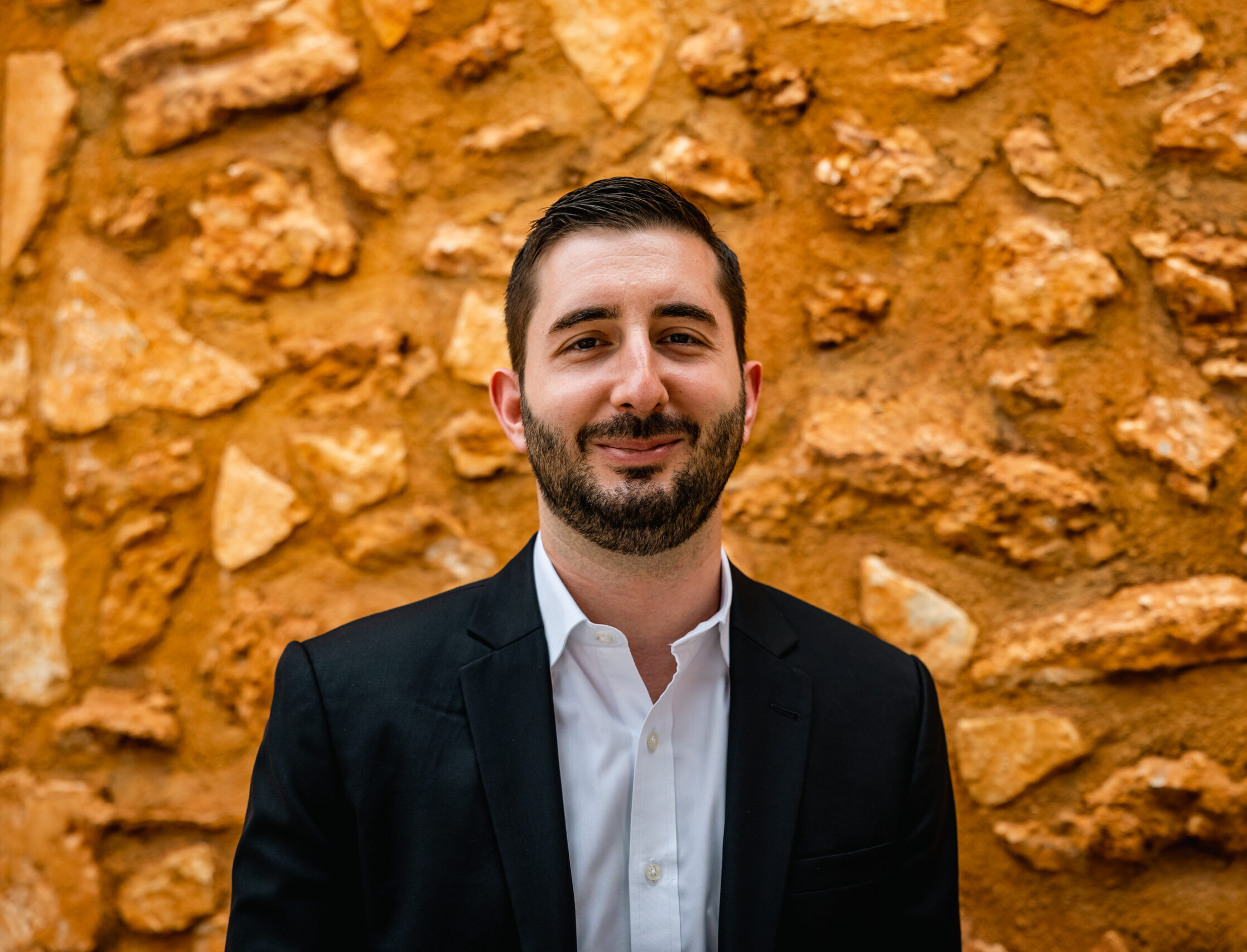
Interview with Matthias Kubli – Portfolio manager and part of the management team

Dear Matthias, what motivated you personally to become part of Carnot Capital – and what excites you about our focus on energy and resource efficiency?

I have known Carnot Capital for many years – I was part of the team from 2013 to 2015. The contact has never been broken off, and since 2021 I have also been privately involved as an investor in the Carnot Efficient Energy fund.
I am convinced by Carnot Capital’s clear guiding principle: technologies must make both economic and ecological sense. This interplay is central to me. At the same time, I am motivated by the goal of outperforming the market and achieving a measurable positive impact.

What specific experience from your career path do you bring to the table that is particularly valuable for our portfolios?
My investment universe has overlapped considerably with that of Carnot Capital in recent years – we have regularly exchanged views on companies and market trends. My in-depth understanding of industrial and technology companies is a clear value add. I also have the skill critically analyse new technologies and realistically assess their market potential – an essential skill in an environment that is focused on efficiency.

Was there a key moment that particularly shaped your interest in sustainable investments?

Throughout my travels to various regions of the world I have seen how differently resources are used. In Switzerland, we are already well positioned in terms of energy efficiency – globally, the situation is often quite different.
For sustainability to have a global impact, solutions must be affordable and scalable. Overly expensive technologies or purely theoretical approaches do not help. This pragmatic approach fits in very well with Carnot Capital’s philosophy.

Where do you see the greatest opportunities for Carnot Capital in the coming years – both at a portfolio and company level?

Carnot Capital has loyal clients and a strong position in the market for impact investments. Its long-standing specialisation in energy and resource efficiency is a competitive advantage that enables it to identify new trends at an early stage.
Many companies in our investing universe have experienced challenging phases in recent years. However, I am currently seeing a trend reversal in several sectors. This new phase of reorientation is an opportunity to make targeted investments in companies that are on the verge of a sustainable growth spurt – and thus generate additional returns for our investors.

How do you see the role of listed companies in the transformation towards an energy- and resource-efficient economy?
We are at a turning point: the time for declarations of intent is over – reality is catching up with us. Shortages, extreme weather, pollutants in food – all this shows how urgent change is. Listed companies play a central role: with their innovative power and financial strength, they can scale solutions and achieve real impact. For many, this transformation offers not only a responsibility, but also an enormous opportunity for growth.

What values are particularly important to you in management and collaboration – and how would you like to bring these to Carnot Capital?
In a small team like Carnot Capital, entrepreneurial thinking and pragmatic action are crucial. For me, a common goal is the central anchor. I attach great importance to discussing ideas openly – at all levels. If everyone can actively contribute, the company remains dynamic and continues to develop. This is precisely the kind of forward movement that I want to help shape at Carnot Capital.

Many thanks dear Matthias – we look forward to a sustainable future with you.
Weitere Beiträge

Nuclear Power – A New Boom or the Beginning of the End?

Nuclear Power – A New Boom or the Beginning of the End?

This was the title of a discussion programme on SRF television. The answer depends very much on your point of view. The expansion of nuclear power slowed down after the Chernobyl disaster (1986) and practically came to a standstill after Fukushima (2011), with Asia (China, India) being the exception. Since Europe has renounced Russian gas and wants to take the reduction of CO2 emissions seriously, nuclear energy is enjoying more support in Europe again.

The biggest advocates of nuclear power come from the IT industry: for Jensen Huang, CEO of Nvidia, nuclear power is virtually the natural energy source for operating the power-hungry data centres and Microsoft has already concluded a long-term supply contract with the damaged Three Mile Island nuclear power plant.

Some Key Aspects

In addition to high reliability and climate neutrality, nuclear power’s apologists cite the greater safety and lower radioactive waste of the new reactor designs. In addition, nuclear power plants reduce dependence on problematic exporters of fossil fuels. Essentially, however, proponents and opponents have been putting forward the same arguments for decades. Public opinion remains divided and varies from country to country.

The technology is indeed developing. However, the first SMRs – Small Modular Reactors – are unlikely to go into operation before 2030. The economic viability of new construction projects remains a major challenge, as the new plants in the UK and Finland have shown. While state support for solar and wind projects is declining, this is not (yet?) the case for new nuclear power plants.

Significance for Carnot Capital

The future of nuclear technology remains vague due to high costs and safety concerns, which is why we are not directly involved. In addition, sustainability is controversial. Over the last 20 years, the production of nuclear power has remained more or less stable globally. Due to the high growth in renewable and fossil electricity production, the proportion has halved to around 10%. In terms of value, investments in renewable energies are currently around ten times higher. We are therefore looking for investment opportunities in the management of electricity grids, where requirements have risen sharply. Schneider Electric, ABB and BKW fall into this category.


Did You Know?

The first British coal-fired power station was started up by Thomas Edison in 1882, and the last one went out of operation at the end of September.


April – A Month Dedicated to Sustainability

April – A Month Dedicated to Sustainability

With spring’s arrival, not only does nature awaken, but so does our awareness of the planet. In April, environmental protection takes center stage, culminating in the international Earth Day on April 22. This year’s theme, “Our Power, Our Planet,” underscores the importance of sustainable resource management on a global scale. One approach gaining significance is impact investing, which strategically channels capital into companies that generate measurable positive effects on the environment and society. Our funds contribute by investing in energy- and resource-efficient technologies while delivering attractive returns.

Carnot Capital: Technology-Driven Sustainability

At Carnot Capital, we believe that technological innovation is the key to a sustainable future. Instead of advocating for sacrifice, we invest in companies whose products and technologies enhance energy and resource efficiency. With over CHF 250 million in assets under management and an annualized performance of over 6% since 2007, we successfully combine ecological responsibility with financial appeal.

Strategy and Target Sectors of Carnot Capital Funds

Our funds, particularly the Carnot Efficient Resources Fund, invest globally in publicly listed companies with resource-efficient technologies. Company selection is based on an attractiveness ranking, incorporating valuation and quality criteria. A key metric in our assessment is the Return on Capital Employed (ROCE). Our target sectors align with the four classical elements:

  • Fire (Energy): Building technology, Industry 4.0, e-mobility, renewable energy
  • Water: Drinking water treatment, wastewater purification, irrigation infrastructure
  • Earth: Agriculture, food processing, raw material recycling
  • Air: Emission control, low-emission fuels

Attractive Investment Opportunities

Focusing on companies with sustainable technologies not only creates ecological benefits but also opens up economic opportunities. Technologies that enhance energy and resource efficiency have excellent growth potential, as they provide solutions to pressing global challenges. Investors thus benefit from the combination of positive environmental impact and financial returns.

Conclusion

Earth Day on April 22 highlights the urgency of sustainable action. Impact investing, as practiced by Carnot Capital, demonstrates that investments in energy- and resource-efficient technologies can make a measurable contribution to global sustainability—without compromising on attractive returns. By supporting companies that develop innovative solutions to environmental challenges, investors actively contribute to a more sustainable future.

Andres Gujan, Founder of Carnot Capital & Impact Portfolio Manager, April 2025